Bangkok’s traffic is legendary for the wrong reasons, and the BTS Skytrain is the easiest way to skip most of it. Opened in December 1999, it runs elevated above the streets on concrete viaducts, so a journey that might take 40 minutes by car in rush hour traffic can take 10 minutes by train instead. The BTS Skytrain Bangkok network covers 68 km across 60 stations and connects nearly every major shopping district, hotel area, and tourist stop in the city. This guide covers the lines, the fares, and exactly how to use it without wasting time at the ticket machine.
The BTS Skytrain Bangkok Lines: Sukhumvit and Silom
The BTS Skytrain Bangkok system runs on two main lines, plus one short extension.The Sukhumvit Line (light green) is the longer of the two, running north to south through the city’s main tourist and business districts, including Mo Chit (with its connection to Chatuchak Weekend Market), Asoke, Phrom Phong, Thong Lo, and On Nut, before continuing well beyond the old city limits toward Samut Prakan. The Silom Line (dark green) is shorter and covers the western side of the city, including the financial district around Sala Daeng and Chong Nonsi, before crossing the Chao Phraya River toward its terminus at Bang Wa.
There’s also a short third line worth knowing about: the Gold Line, a three-stop automated connector linking Krung Thon Buri on the Silom Line to ICONSIAM mall across the river. It’s easy to miss on an older map, but useful if ICONSIAM is on the itinerary, since the alternative is a longer ferry or taxi ride.
BTS Skytrain Bangkok Fares and Ticket Options
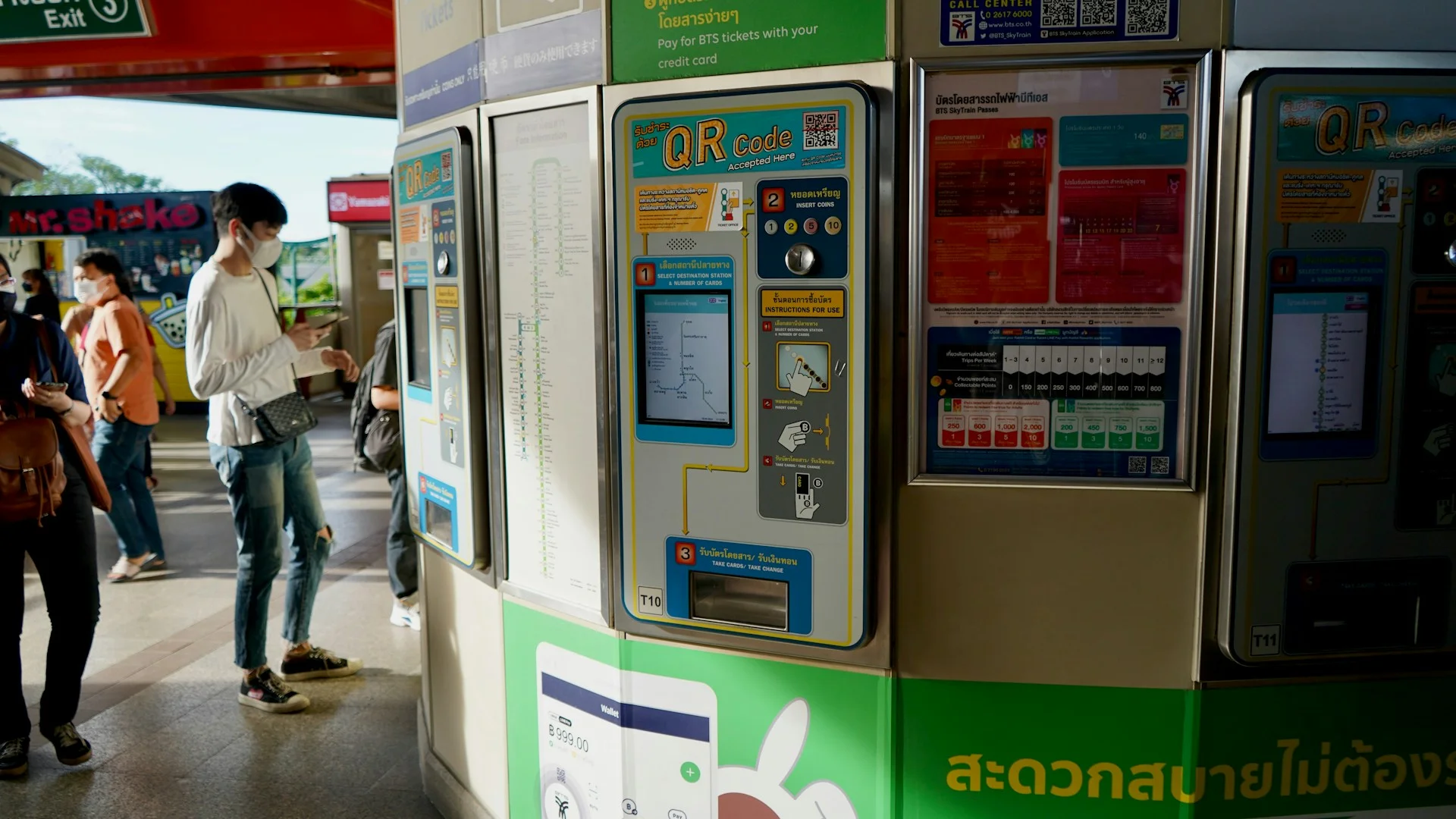
Single-journey fares on the BTS Skytrain Bangkok network run from 17 THB for one stop up to 65 THB for the longest trips across the system, with most rides within central Bangkok falling between 25 and 45 THB. Fares are calculated by distance rather than a flat rate, so the machine needs a destination selected before it shows the price. Children under 90cm tall travel free, with height charts posted near the ticket machines for reference.
Three ticket options cover almost every visitor’s needs, each suited to a different kind of trip:
- Single journey ticket: Bought from machines at every station using cash or QR payment (WeChat Pay, Alipay, or Thai mobile banking apps, depending on the machine). Select the destination on the touchscreen map, insert the fare, and collect a thin plastic ticket card. This is the simplest option for one or two rides, but the ticket is only valid on the day of purchase and machine queues can get long at busy times.
- Rabbit Card: Bangkok’s reusable contactless card, similar to London’s Oyster or Tokyo’s Suica. It comes with a 120 THB card issuance fee (no separate deposit), plus a minimum 100 THB stored-value top-up to activate it, and can be topped up at any station counter or machine. It skips the ticket queue entirely and works out cheaper in time saved, even though the fare itself is identical to a single-journey ticket.
- One-Day Pass: 150 THB for unlimited BTS rides from the time of purchase until midnight that same day. Worth it for four or more trips in a single day, though it only covers the BTS itself, not the MRT or Gold Line. It’s sold at station ticket counters, not the vending machines.
Unlike the MRT, the Airport Rail Link, and the SRT Red Line, the BTS doesn’t yet accept contactless credit or debit cards directly at the gates. A single-journey ticket, Rabbit Card, or One-Day Pass is required for now, though BTS has confirmed it’s developing EMV contactless readers for a future rollout.
How to Use the BTS Skytrain Bangkok: A Quick Walkthrough
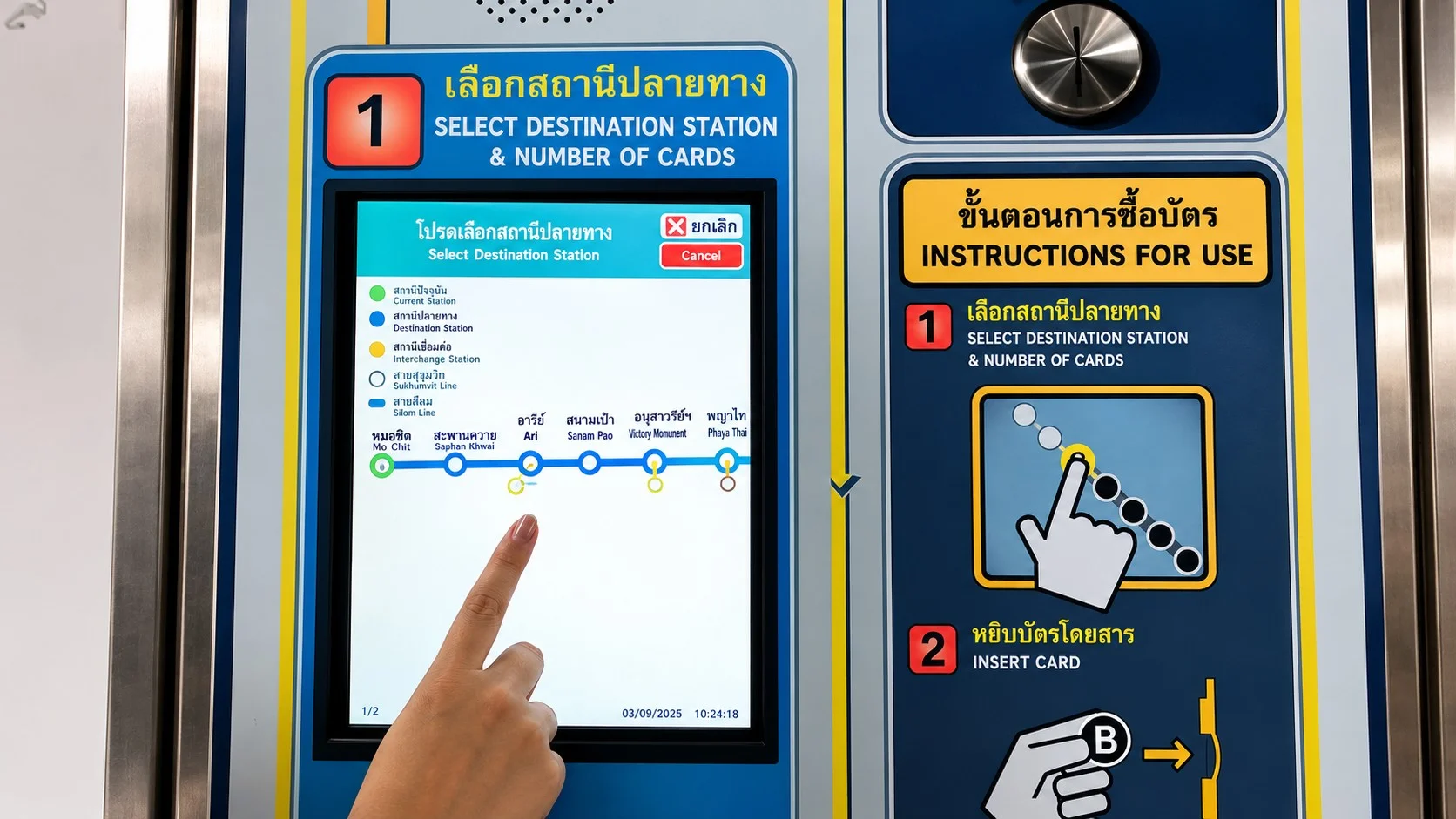
Trains run daily from 6:00 AM to midnight, arriving every few minutes during peak hours and a little further apart midday and late evening. At the station, choose English on the ticket machine, tap the destination on the touchscreen map, pay in cash or by QR code, and collect the ticket card from the tray below. Tap the card against the reader at the entry gate, keep it safe during the ride, then insert it into the slot at the exit gate to open it and let you through, the machine keeps the card at that point.
Rabbit Card users skip all of this and simply tap in and tap out at the same reader used for single-journey tickets. Contactless bank cards aren’t accepted on the BTS yet, unlike on the MRT or Airport Rail Link. Platforms get genuinely crowded at rush hour, particularly at Siam, Asoke, and Phrom Phong, where even the standard four-car trains can fill up quickly during the evening commute, so budgeting a few extra minutes at the busiest stations is realistic advice, not just caution. The trains themselves are air-conditioned and kept noticeably cool, worth knowing if stepping off a hot street straight onto the platform.
Connecting to MRT and the Airport Rail Link
The single most important thing to understand about Bangkok’s rail system: the BTS Skytrain Bangkok network and the MRT subway are run by completely different companies. A Rabbit Card doesn’t work on the MRT, and an MRT card doesn’t work on the BTS. Transferring between them means physically exiting one system and paying a new fare to enter the other, there’s no combined ticket or fare discount for switching lines. A contactless bank card is the one exception that works across both systems, tapping in fresh each time regardless of which network it’s used on.
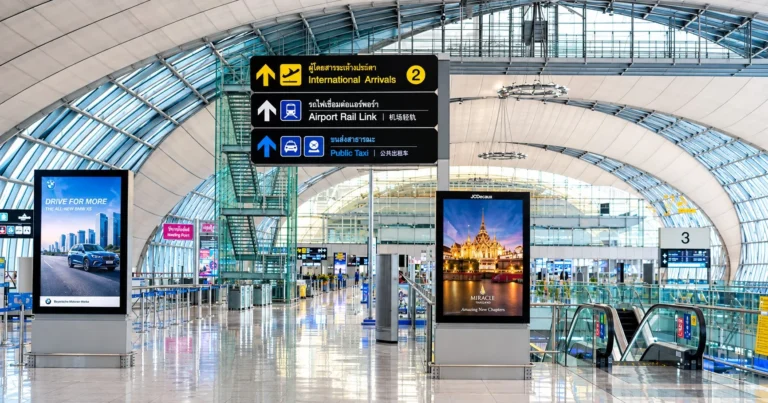
The main interchange points are Asoke (BTS) to Sukhumvit (MRT), and Mo Chit (BTS) to Chatuchak Park (MRT), both requiring a short walk between the two station entrances rather than a direct underground link. For getting to and from Suvarnabhumi Airport, the Airport Rail Link connects to the BTS at Phaya Thai station on the Sukhumvit Line, or its Makkasan station connects to MRT Phetchaburi station, giving travellers a choice of which system to continue on depending on where in the city they’re headed. Since November 2025, the Airport Rail Link has also accepted contactless credit and debit cards directly at the gates, ahead of the BTS itself.
Best BTS Skytrain Bangkok Stops for Visitors
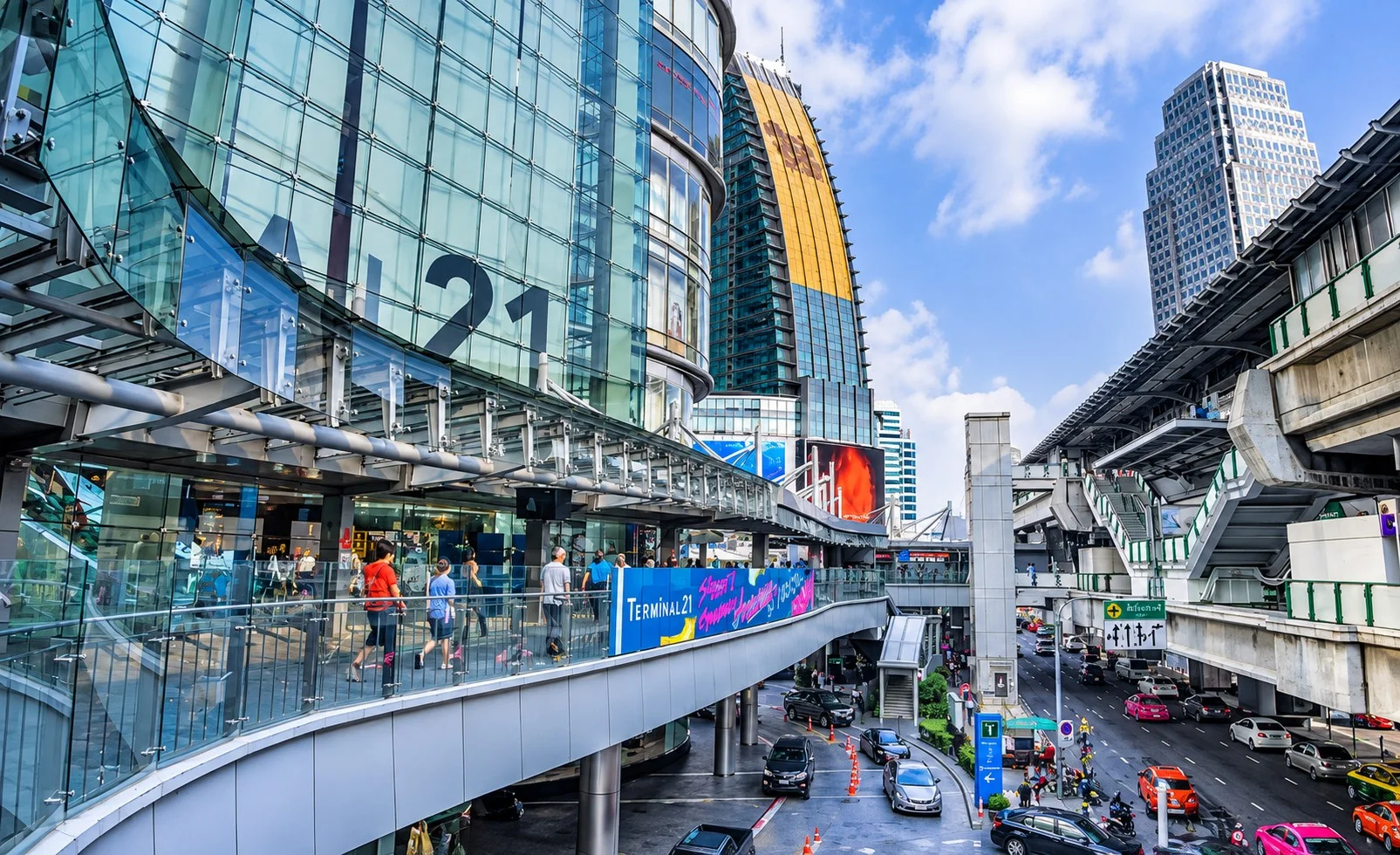
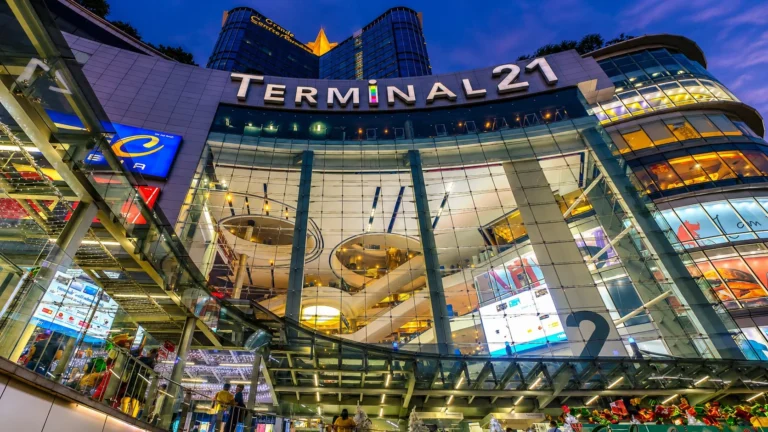
Asoke is one of the most useful stops on the whole network: it’s the direct interchange to the MRT, sits in the middle of Sukhumvit’s hotel and dining strip, and is right next to Terminal 21. From there, it’s a short ride to Phrom Phong for the EmQuartier and Emporium malls, Siam for the interchange to the Silom Line and the wider shopping district around Siam Paragon, or Mo Chit for Chatuchak Weekend Market on the days it’s open.